

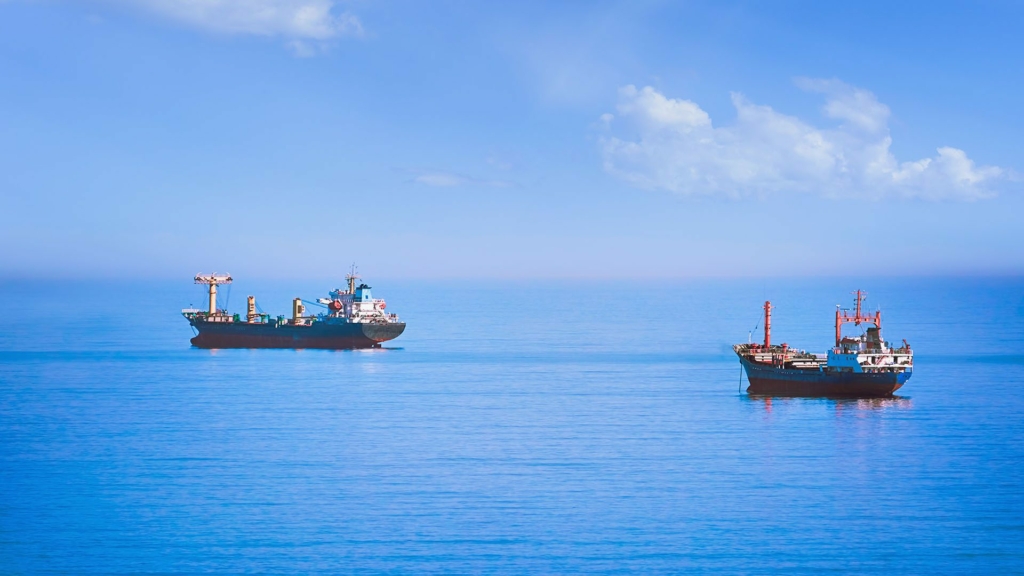
Iran & Middle East Conflict
Page published: 13 April 2027
Page last updated: 13 April 2027
On 28 February 2026, coordinated airstrikes by the United States and Israel targeted Iranian military and leadership, followed by missile and drone attacks by Iran across the Gulf. This marked a significant escalation in the regional conflict.
This page brings together The Swedish Club’s latest updates, guidance and external resources to support Members in understanding developments and assessing their operational and insurance considerations.
FAQ for members
1. Seafarer safety and health
The current environment combines a number of factors that place additional demands on crews. These include extended waiting times, uncertainty around transit, increased traffic density in certain areas and reduced reliability of navigational systems. Taken together, these conditions can affect workload, concentration and overall situational awareness. As a result, crew wellbeing becomes directly linked to safe vessel operation.
Owners can support safety by taking a proactive, people‑centred approach. This includes monitoring workload, reinforcing rest opportunities, and ensuring crews receive clear, timely updates about voyage developments. Strong communication reduces unnecessary worry, helps crews manage their energy, and supports safer decision‑making on board.
The priority is enabling crews to operate safely in a more demanding and unpredictable environment. Key considerations include:
- Keeping crews informed so they understand what is happening and why decisions are being made.
- Adjusting workload and watchkeeping to reflect extended waiting periods or increased navigational demands.
- Supporting bridge teams when navigational inputs are less reliable, ensuring cross‑checking and shared situational awareness.
- Encouraging early conversations when concerns arise — this helps identify risks sooner and protects safe operating margins.
Clear, steady communication, both within the vessel and with families, plays a stabilising role. When seafarers know information is flowing and their families are not left in the dark, they can maintain focus more effectively.
In the current situation, access to reliable, local information is especially valuable. Owners and Masters should consider:
- Using correspondents and port agents for fast, accurate updates on port conditions, crew changes, and local constraints.
- Establishing regular communication routines so crews and families receive timely updates rather than waiting for news during
- Providing practical wellbeing support, including opportunities for rest, mental decompression, and clear channels for raising concerns.
Effective communication is not an optional extra, it is a core safety measure. When crews feel informed, supported, and connected to their families, they are better equipped to maintain the clarity and stability required for safe vessel operations.
2. Vessel safety and integrity
Transit remains possible but is no longer routine.
Conditions in and around the Strait now mean that passage may depend on timing, traffic build-up and local developments at the time of arrival. It is therefore more helpful to view the Strait as operationally constrained, rather than focusing on whether it is formally open or closed.
The current risk profile is driven by a combination of factors rather than a single issue.
Navigation may be affected by interference or reduced reliability of positioning systems. At the same time, vessels may be operating in closer proximity than usual due to holding patterns or reduced flow through the Strait. These factors, together with a more dynamic security environment, reduce the margin for error.
Available intelligence indicates widespread electronic interference and a high number of vessels operating at slow speed or holding in approach areas, which is consistent with what Members are reporting operationally
Voyage plans are best treated as flexible rather than fixed.
Members may wish to allow for the possibility that transit timing changes, that waiting time increases, or that routing decisions need to be revisited close to execution. Maintaining optionality is often helpful in this context.
Delays are likely to arise from conditions in the transit corridor rather than from port closures alone.
This can result in vessels waiting outside the Strait, staggered passage and less predictable arrival times. Even where ports are operating, access to them may be affected by upstream constraints.
3. Contractual Issues
The current situation affects the assumptions that underpin voyage performance.
Where transit timing becomes uncertain, this may affect obligations relating to routing, performance and delivery. This is relevant both for vessels currently trading in the region and for those considering future fixtures.
This will depend on the charterparty and the circumstances at the time.
War risks clauses are designed to allow for this type of situation. They generally refer to whether, in the reasonable judgement of the Master and/or Owners, the vessel may be exposed to danger. This is a practical assessment, informed by the conditions encountered or reasonably anticipated.
War Risk Clauses in Charterparties
Where incorporated, these clauses provide a framework for responding to changing conditions.
Depending on the wording, they may allow Owners to decline to proceed, to request alternative instructions or to require additional insurance arrangements before continuing. They are intended to introduce flexibility where conditions move outside normal operating parameters.
A more detailed explanation is available here
Where war risks clauses are absent or limited, options may be more restricted.
In those cases, reliance may need to be placed on more general legal principles, which typically require a higher threshold and offer less flexibility. This underlines the value of reviewing contractual terms before committing to voyages in the current environment.
4. Insurance Issues
The war insurance market is inherently responsive to geopolitical developments. Where events materially affect the risk profile of specific geographical trading areas, insurers may adjust terms in accordance with the contractually agreed notice provisions. A common market response in such circumstances is the amendment of the List of Areas of Perceived Enhanced Risk (the “Listed Areas”). These Listed Areas form part of the agreed navigational limits, which define where war risk insurance applies as of right, and where additional terms may be required.
In line with the wider war risk market, the Club issued Notices of Cancellation to affected members in order to revise the Listed Areas applicable to the Club’s war risk insurance, as well as to the war risk elements of certain non poolable products. As a result, some geographical areas that were previously unrestricted have now been reclassified as Listed Areas. War risk cover for trading within these newly designated Listed Areas remains available, but is typically subject to specific, time limited terms, which may include additional premiums, warranties, or exclusions reflecting the heightened risk.
For certain non poolable insurance products, cover in Listed Areas may be excluded under the standard terms, but can generally be reinstated through separate, non poolable, time limited buy back arrangements, subject to agreement.
Further detail is available here
Key takeaway for Members
Despite the ceasefire announced on 8 April, the situation is fluid and unpredictable.
Members should not treat the ceasefire as a basis for voyage planning.
For vessels in the region, the focus is on maintaining safe operations in a more constrained and dynamic environment. A measured approach based on current conditions, clear contractual understanding and confirmed insurance arrangements is likely to support the best outcome
For the latest update on local operational information, we encourage our Members to visit the following websites.
These are the latest updates and news from The Swedish Club about the situation