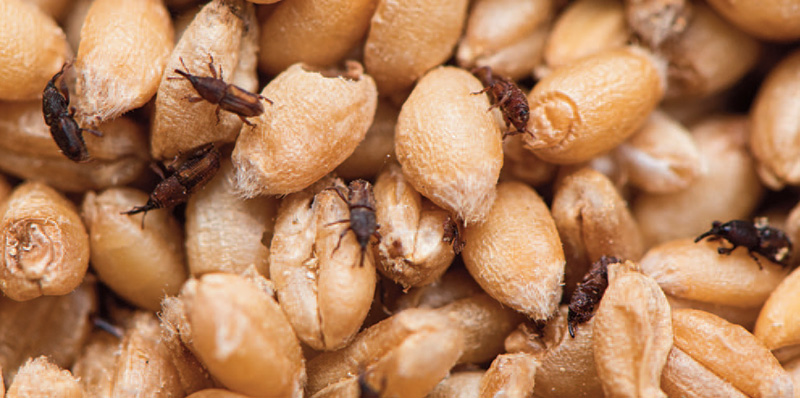
The supramax bulk carrier had loaded wheat for human consumption in a European port for discharge at a Middle Eastern port.
Cargo transfer
The cargo was loaded on board the vessel from a barge alongside and also directly from the quay, transported there by lorries which dumped the wheat in a pile on a large steel plate positioned on the quay. From this open pile the cargo was picked up by a ship crane and loaded into the holds. The vessel had five cargo holds.
Weather interruptions
The loading took about two weeks and during this time there were 12 breaks because of rain. At each rain break, the cargo remaining on the steel plate was picked up by the crane, loaded back on the lorries and removed from the quay. The steel plate was then supposed to be dried prior to loading resuming. The Master was concerned at the frequent rain interruptions and the way the cargo was loaded from the quay. He stated that he had seen cargo being dumped on the wet steel plate, but he did not issue a letter of protest and nor did he clause the mate’s receipts or bills of lading. The cargo log showed that loading into the lower part of hold 3 took place across two hours in the evening and two hours in the early morning of the following day. This stoppage was due to rain.
Poor visibility
Due to the time of year, it became dark at 1600 and so it was difficult for the crew to observe the condition of the cargo properly during loading, or to see if the cargo in the hold was wet or not. There were no extra lights rigged for the cargo holds.
Fumigation
Before departure the cargo was fumigated professionally with aluminium phosphide tablets and seals were applied to all cargo holds. The crew also applied tape and foam on the cargo hatch covers to prevent any fumigant gas from leaking out.
Inspection
The vessel arrived at the discharge port and anchored. Officials boarded the vessel and unsealed the holds so they could inspect the cargo. The vessel then remained at anchor for another three weeks.
Issues at discharge
The vessel finally came alongside, and discharge commenced. Almost all the cargo in hold 3 had been unloaded when infested cargo was found at the bottom. In addition some of the cargo was lumpy indicating wet damage. The cargo that had already been unloaded was found to be sound and in good condition. A salinity test was carried out on the damaged cargo and the result was negative. No saltwater damage was found. The cargo receiver rejected the remaining cargo in the hold because of the insects and lumpy cargo. After the damaged cargo was found, no more cargo was allowed to be discharged and the vessel had to depart.
What can we learn?
- It is likely that the cargo damage was caused by wet cargo being loaded on board in addition to inefficient fumigation in cargo hold 3 – there were no insects found in the other holds.
- It took 14 days for the vessel to be loaded and there were 12 rain stops during this time. Cargo was dumped on wet steel plates on the quay. It is unknown how the barge alongside protected its cargo from rain. All these circumstances are likely to have resulted in wet damage.
- Fumigation was carried out during the voyage and was undertaken with a gas recirculation system.
- If the fumigation failed for cargo hold 3, what was specific to this hold? It is probable that this hold, unlike the others, was not sufficiently tight. Before departure it is imperative that the Master checks that the cargo holds are weather-proof. It should be noted that hatch covers cannot be expected in practice to be ‘gas-tight’. What is required for effective fumigation is that enough of the gas is retained in the hold for long enough to ensure the death of all insect life.
- Gas leakage from the hold may occur due to movement of the hatch covers during the sea voyage.
- It is important to ensure that all rubber packing on the cargo hatch covers is in good condition. The best way to do this is by an ultrasonic test.
- Make sure there is sufficient lighting at night to enable visual inspection of the cargo during loading. It is also essential that the crew monitors the weather reports and radar so that the cargo hatch covers can be closed before any rain starts. There was no note in the deck logbook as to whether the cargo hatch covers were closed or not during loading.
- If any wet-damaged cargo is observed during loading the Master should issue a letter of protest, make appropriate remarks in the mate’s receipts and clause the bills of lading
Downloads