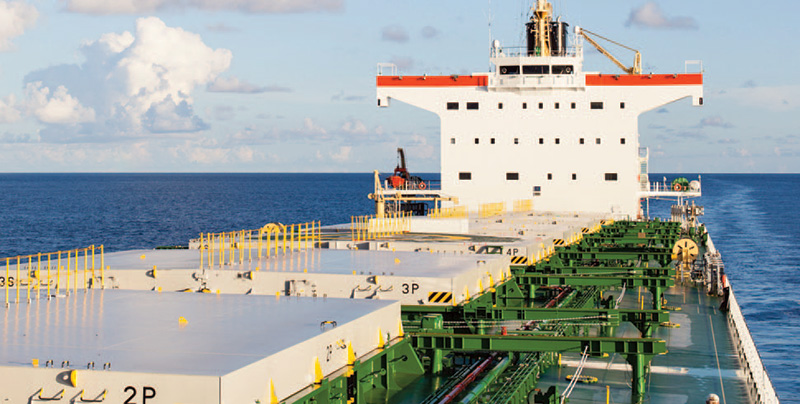
A vessel loaded a cargo of white maize in Topolobampo, Mexico for discharging at several ports in Southern Africa. The temperatures experienced during loading were in the 30°Cs. The cargo was fumigated on the completion of loading. The vessel sailed around South America via the Magellan Straits and experienced ambient temperatures close to 0°C. The fumigation instructions required that the holds remained closed, and they were not opened until 12 hours prior to arrival at the discharge port.
Damaged cargo
On arrival at the first discharge port, the surface of the stow in all holds was found to be mouldy, condensation stains could be seen on the hatches and hatch coaming, and maize had germinated in areas of heavy wetting. This was a clear example of ship’s sweat where moisture inside the hold space condenses on the interior steelwork due to the difference in temperature and then drips or runs into the cargo. The surface layers of damaged cargo were manually segregated by stevedores and by grab. Once the surface layer of mould damage was removed the remaining cargo was discharged in sound condition.
What can we learn?
- The mould damage to the surface due to condensation wetting could have been prevented or minimised if the holds were ventilated after a more typical fumigation exposure period (often 10 days).
- It is important to clarify the ventilation instructions with the fumigators and charterers, as the fumigation instructions are focused on achieving an effective fumigation and do not account for the changes in environmental conditions the vessel may experience during a voyage
Downloads