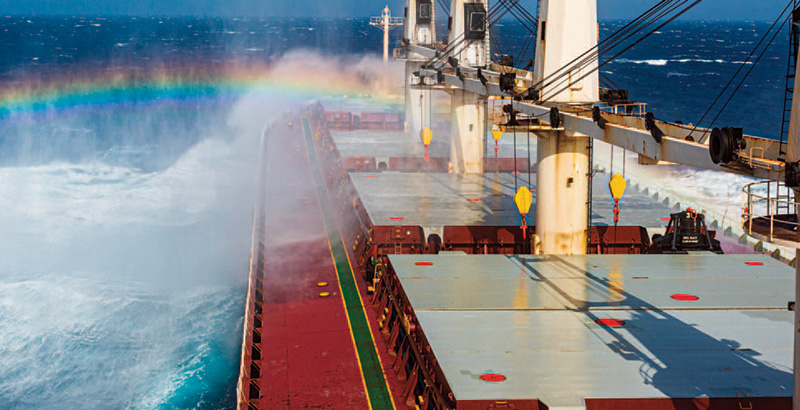
The handysize bulk carrier docked in a European port and loaded wheat into all its four cargo holds for discharge at an East African port. Prior to loading, the crew cleaned the cargo holds by washing them with seawater and rinsing them out with fresh water. A pre-load inspection took place at the port, during which the shipper’s surveyor found the bilges dry and the cargo holds suitable for receiving the cargo. Before departure from the loading port the water ingress alarm was tested by the Chief Officer and found to be in good order. During transit through the Bay of Biscay the vessel encountered rough weather. The vessel’s logbook recorded winds of Beaufort Scale 7-8, with high waves washing over the cargo hatch covers. Although daily sounding sheets showed no water in the bilges and no water ingress alarms sounded, the Master nevertheless prepared a note of sea protest in connection with the heavy weather.
Discharge
Upon arriving at the discharge port the holds were opened and the cargo was visually inspected by the cargo receiver. No issues were noted during this inspection and there was no sign of water ingress. Discharge operations began via grabs into trucks, with all the cargo holds being discharged simultaneously. The trucks transported the cargo to the receiver’s facility. Upon arrival at the receiver’s facility the trucks unloaded their cargo in a single grain intake pit from where it was transferred into silos.
Damaged cargo
As discharge progressed and after most of the cargo had been discharged, a surveyor acting for the cargo receiver noticed some damaged cargo towards the bottom of cargo hold 1. This was described by the crew as a thin layer of wet cargo near the tank top. Efforts were made by the crew to segregate the relatively small amount of wet cargo from the sound by placing it in plastic drums, but the stevedores insisted that discharge operations were suspended. After some consideration and several days delay, it was agreed that the damaged cargo could in fact be properly segregated, and discharge operations resumed. However, after only some three or four truckloads of dry cargo had been discharged, the separation process became confused, resulting in wet and dry cargo being discharged together. This initial failure of segregation was exacerbated when the cargo was subsequently dumped into the single grain intake pit and from there was transferred into the receiver’s silos.
Analysis
The discoloured/wet cargo was analysed by a local laboratory, and the results showed the cargo had been contaminated with seawater. No actual laboratory analysis for food safety parameters was carried out. However, based on the test results the laboratory stated that the cargo was unfit for human consumption. The laboratory did not suggest applying these results to the entire cargo from hold 1, only to the samples that were analysed. Nevertheless, the cargo receiver applied this ruling to a substantial amount of the cargo from hold 1 – far greater than the amount of cargo that had been segregated by the crew.
Vessel arrest
The cargo receiver subsequently arrested the vessel and requested security of EUR 2,000,000 to cover their losses.
Subsequent investigation
The receiver sought to rely on the clean bill of lading and the fact that cargo was discharged in damaged (wet) condition. While there was undoubtedly an issue of wetting while the cargo was on board the vessel, subsequent investigation showed that the real issue was the way in which the cargo had been handled during and following discharge from the vessel, as the stevedores failed to take proper care to effectively segregate sound from damaged cargo, but in fact mixed the few tons of wet cargo with a much larger quantity of sound cargo that had been discharged from other cargo holds. This led to a far larger claim than ought ever to have arisen. A full investigation into the source of the water ingress could only take place at the next port, when the vessel was cargo-free. That inquiry revealed the source to have been a partially corroded pipe, which had not been picked up during an inspection of the cargo holds at the loading port.
Settlement
The cargo receiver subsequently sold some 7,000 million tonnes of the cargo as animal feed, although they were unable to provide adequate documentary evidence to demonstrate the reasonableness of that decision. The receiver’s overall claims were subjected to London arbitration. Those claims were eventually settled amicably for around 15% of the total initially sought.
What can we learn?
- In general terms, when wet cargo is discovered on board the prudent action for a cargo receiver seeking to mitigate any loss is to segregate visually affected cargo from visually sound cargo during discharging. Sound cargo should then be stored separately from affected cargo and any alleged damage, or reduction in quality, should be proved by representatively sampling the suspect cargo followed by appropriate testing of the samples.
- In this case, efforts by the Club and the appointed P&I surveyor to properly investigate the extent of the wet cargo were hindered by the fact that attendance was not requested by the member until after the allegations of wet cargo were initially brought by the receiver (by which point the crew had already finished their initial segregation of the wet cargo). As a matter of good practice, it is extremely important that prompt notification is made to the Club whenever there is any allegation or suggestion of cargo damage. This is essential in order that the Club and their local representatives can properly investigate the facts and take all steps necessary to gather evidence and protect the member’s position.
- Here, neither the cargo receiver nor the stevedores took appropriate steps to segregate this allegedly damaged cargo during discharge. On the contrary, their actions during discharge from the vessel and subsequently while transferring the cargo from the trucks to the grain intake pit and thereafter the silos were the cause of the largest part of the damage. These actions turned what should have been a nominal cargo damage claim into something far more serious.
- A foodstuffs expert hired by the owner was of the opinion that based on the test results the wheat would still have been suitable for milling and that it was uncommercial and unreasonable to have taken a decision to downgrade and sell so much of the cargo for animal feed production without making any proper attempt to establish the overall quality. Further, there was no evidence concerning the fate of the 7,000 million tonnes allegedly sold as animal feed.
- The best preventive action the crew can take in a situation like this is to take pictures and make detailed reports about any damaged cargo that is found. Clear photographs of the cargo and the loading operations are also invaluable. These should include an overview of how the cargo was loaded, the general view of the cargo in the holds during loading and, where possible, close-up photographs of the cargo itself.
- Before leaving port, the crew should inspect the hatch covers to ensure they are in weathertight condition. There should be no cargo in the drain channels, each hatch cover should be secured properly, paint should be intact and the gaskets and coamings should be in good condition. Cargo holds should be inspected not only in terms of cleanliness, but also for any signs of leaks or possible sources of water ingress that risks causing damage to the cargo
Downloads