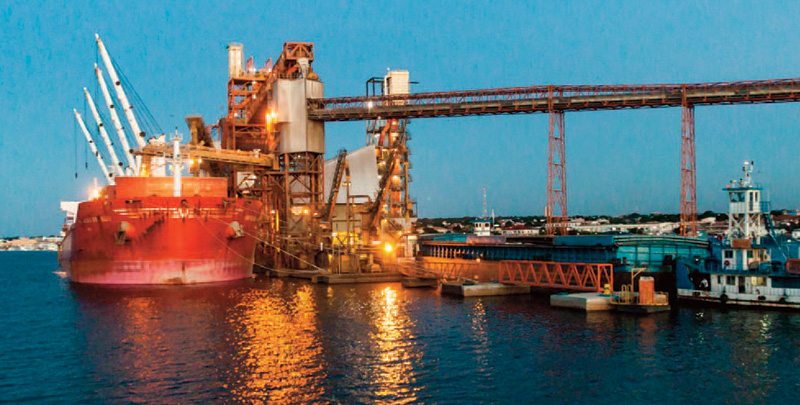
The vessel loaded soya beans in a South American port, to be discharged in China. At the discharge port, the vessel was arrested for a claim for USD 3.8 million as it was found that 7%- 8% of the soya beans were black.
Issues on loading
Investigation revealed that the black-coloured beans were already in this discoloured state prior to loading. It was further determined that there was no further discolouration generated on board during the voyage. It transpired that the discoloured cargo had been mixed with sound cargo during loading.
Problems observed
When loading, the Master had observed the extraordinary amount of black-coloured beans and informed the shipowner. However, no report was made to the Club and no surveyors were dispatched. The Club reserved cover relying on Rule 4 Section 3 of the Club Rules because the bill of lading was not issued properly, but was issued clean without any comments on the condition of the cargo. Eventually, the receivers waived a majority of their claim by settling for less than 10% (i.e. USD 300,000) of the initially claimed amount.
What can we learn?
- Carriage during hot seasons, prolonged storage at pre-shipment, and carriage of soya bean cargo with a high moisture content should all be avoided to reduce the risk of selfheating. It is nearly impossible to prevent self-heating damage when a cargo has a high moisture content, and this cannot easily be detected by the vessel’s crew during loading. Therefore, members should always be aware of the factors that can contribute to a high moisture content in soya bean cargoes, which are as follows:
- Ingress of rain and/or seawater
- Broken pipes or overflowing bilges
- Condensation due to lack of ventilation
- To avoid the risk of cargo damage, a vessel’s crew should be warned of the potential risks beforehand.
- Discolouration of beans can occur due to selfheating or due to the growth of a fungus or by dirt. If the soya beans are not damaged or discoloured internally, they are considered sound.
- The Club strongly recommends that members pay close attention to the apparent condition of the cargo prior to loading.
- Cargo experts should be called upon immediately to observe the pattern of damage in the cargo hold(s) and to take samples for analysis for evidential purposes (i.e. for potential defence against a claim by cargo receivers).
- The owner/manager should always be ready to provide the Master with any assistance necessary in recording appropriate remarks on the bills of lading. When in doubt, the Club’s assistance should be sought immediately. Such proactive response by members could significantly change the outcome of a soya bean cargo damage claim.
- The owner/manager should always consider obtaining assistance from an experienced surveyor, or cargo expert, or more conveniently call their Club for assistance whenever there are doubts about the condition of the cargo that is being loaded.
Downloads