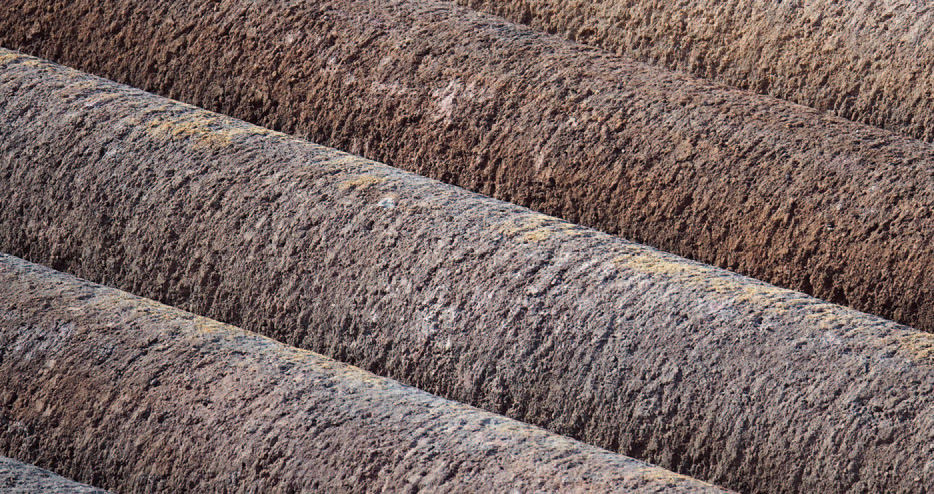
The vessel had loaded a cargo of concretecoated pipes. Some of the pipes had been stored in the port without any cover, there was damage to the cement coating, rust, scratches, broken and missing strapping bands, so the Master claused the bill of lading.
Lack of protection
During loading, some of the pipes had no protection towards the bulkhead. There was also a lack of dunnage between the different layers of pipes.
In the discharge port the surveyor claimed that the pipes had been further damaged during the voyage. Some pipes were also damaged during discharge as they hit the ground and were dented as a result of carelessness by the stevedores.
It was found that stevedores did not use proper dunnage and did not protect the pipes from touching the ground. The cargo had damaged edges and barrels, cement chipped off, cracked sockets and other damage. The pipes with damaged edges and cement chipped off could be repaired but the pipes with compressed barrels and cracked sockets could not. In the storage area the pipes had no proper dunnage or cover.
What can we learn?
- Before loading commences the Chief Officer should discuss the vessel’s cargo securing manual with the stevedores and what is required for the specific cargo being loaded.
- A good preventive measure is to have a preloading meeting with the crew and stevedores before loading begins.
- It is important that the manager updates the CSM (Cargo Securing Manual) with any new securing requirement.
- Review the stowage plan prior to loading.
- A pre-loading survey is always recommended. A detailed pre-loading report should be produced showing the extent of any exposure to rain/sea spray, together with photos highlighting the cargo’s condition during transporting the steel to the wharf, including rust observations and any steel distortion e.g. bent bars, bruised coils and damaged packaging.
- When cargo is already present at the wharf, key observations must include all evidence of rusted steel with silver nitrate tests to verify any exposure to sea water/spray, any damage to products stacked at the wharf including, bent bars, loss of strapping/unwinding on steel coils, extent of telescoping in the coil centre and loose outer laps on the coils, damage to coil edges and comments on the effectiveness of any covering for protecting cargo at the wharf.
- Ensure bills of lading are claused, relating to defects/abnormalities observed during the pre-loading and loading operations e.g. evidence of damaged straps, unwinding or telescoping and damage to packaging.
Downloads