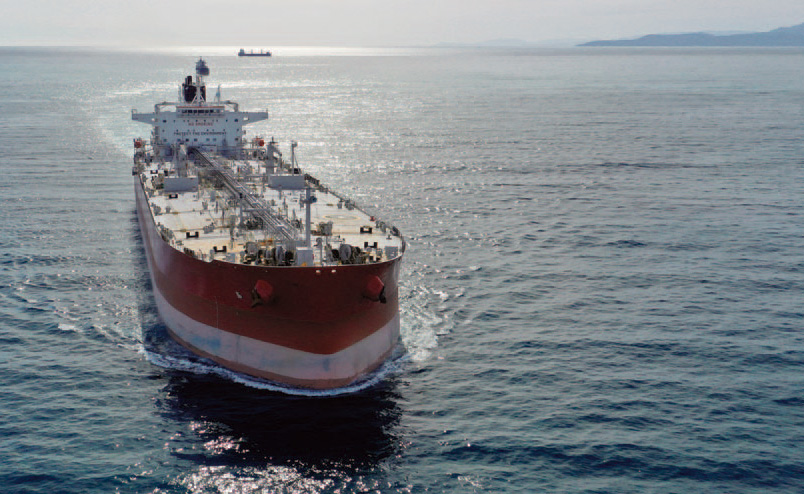
The vessel had loaded crude palm oil and palm kernel oil and the cargo was to be delivered to three different consignees in the discharge port.
Abnormal ullage readings
A couple of days into the voyage the Chief Officer was in the cargo control room and noticed abnormal ullage readings for the 4S & 2S cargo tanks. The ullage of 4S increased and the ullage of 2s reduced by the same amount. He opened the suction valves of 2S and 4S but closed the vales again as cargo tanks 4S and 2S were on the same discharge line. This stopped the increase of cargo into cargo hold 4S.
Cargo pair tanks
The vessel’s cargo procedures covered the carriage of four different grades in its six cargo pair tanks and the slop tank. These pairs were on the same discharge line and had one cargo pump per cargo tank group.
- One cargo in No 1 (P&S) and No 3 (P&S) – the same line should be for the same cargo.
- One cargo No 2 (P&S) and No 04 (P&S) – the same line should be for the same cargo.
- One cargo No 05 (P&S) & 06 (P&S) – the same line should be for the same cargo.
Each group had a separate cargo pump which pumped the cargo to a separate cargo manifold crossover.
Incorrect procedures
However, different grades of cargo had been loaded in the different cargo pairs. Cargo tank 4S was loaded with crude palm oil and 2S was loaded with palm kernel oil. This is not the normal procedure. As stated above the same cargo should be in cargo tanks 2S and 4S as they are on the same cargo line.
Internal leakage
As the 2S and the 4S shared the same discharge line, any internal leakage from the hydraulic valve would allow the cargo to contaminate the other tank. An analysis of the crude palm oil cargo in 4S was carried out at a laboratory where it was confirmed to be contaminated with palm kernel oil. The vessel discharged the non-contaminated and contaminated cargo into two different shore tanks. The claim was settled for more than USD 600,000
What can we learn?
- This case highlights the importance of not deviating from the normal loading procedures. If the vessel had loaded as per the normal loading pairs it would not have been an issue if a valve between the tank pairs was leaking, or open by mistake, as the cargo would have been the same in the tank pairs.
- As an act of omission and commission, the possibility of inadvertently opening and closing both valves at the same time in the cargo control room cannot be ruled out during the voyage
Downloads