Introduction
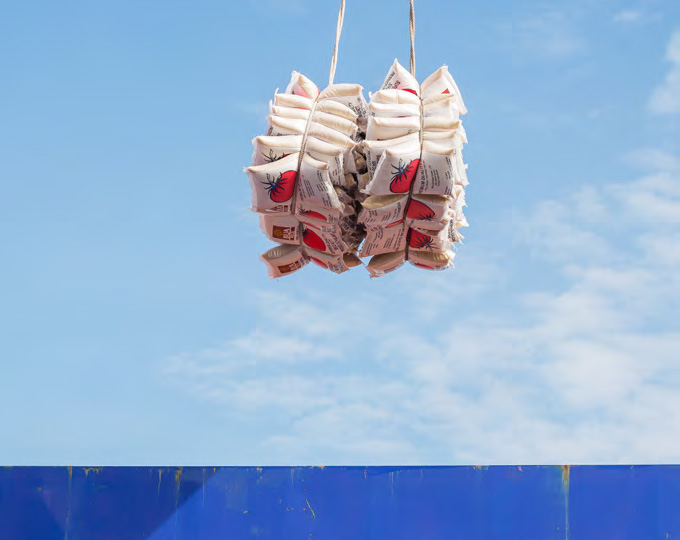
One of the most common sources of cargo claims is the bagged rice trade from Asia to West Africa, with the top three rice exporting countries being India, Thailand and Vietnam. Bagged rice cargoes from all Asian rice exporting nations are often subject to claims at discharge. This is partly due to the inherent risk of condensation associated with the voyage route.
Guidelines for the shipment of bagged rice cargoes
1. Pre-loading
Following the discharge of the vessel’s previous cargo, the holds should be cleaned. Very often the expected cleanliness grade is stated in the charterparty. In absence
of such indication, industry standards are to be followed. Rice, as with many other agricultural products, may be damaged in contact with sea water. Prior to loading,
the crew must ensure that the cargo hatches are watertight. It is prudent for a hatch cover test to be undertaken. This can be done using an ultrasound device or hose test. These tests are important as they enable the crew to make any necessary repairs to the hatch covers prior to loading of cargo. Furthermore, they provides good supporting evidence against accusations of water ingress through the hatch covers in the event of a wet damage cargo claim.
2. During loading
Bagged rice is usually loaded from trucks or barges and manually loaded by stevedores in the holds. Hatch covers must be in good working order prior to
loading as there may be many stoppages for rain during loading. The crew should closely monitor weather conditions and close the holds promptly should rain be anticipated. Sudden heavy rain incidents at tropical load ports have caused large cargo claims at the load port and been linked to increased cargo claims at the final destination.
A survey or tally company should be appointed to tally the number of bags loaded on board for each type and size of bag. In addition, it would be prudent to appoint surveyors or cargo superintendents to monitor the moisture content and temperature of the cargo at regular intervals throughout loading. The superintendents will be able to ensure that any wet, mouldy or insect infested bags are rejected and replaced with sound bags.
Dunnage & Stowage
Dunnage refers to the material used to separate cargo from the interior steelwork of the holds. The purpose is to reduce the risk and severity of damage arising from bags in contact with the hold steelwork and condensation.
The dunnage application may be the responsibility of the charterer or the Master (the charterparty will specify the responsible party). It would be prudent for both parties to ensure that dunnage has been laid according to industry standard/instructions (unless specified otherwise in the charterparty agreement). The laying of dunnage, as with all stages of the loading process, should be documented with photographs taken by crew and local surveyors. The Master should issue a letter of protest to all parties concerned as soon as any potential issues with the dunnage materials or placement are noted.
The most common system of dunnage for bagged rice carried on bulk vessels combines the use of Kraft paper, polystyrene sheets and plastic sheeting. Tank tops, hopper tanks and bulkheads are lined with Kraft paper and plastic sheeting, while the side shell plating is typically covered with polystyrene sheets and plastic sheeting. Dunnage instructions frequently advise placement of polystyrene between side frames with plastic sheeting secured across the frames. Kraft paper can also be used to line the side shell plating.
When stowing the bags, particular attention should be paid to ensure bags are not stowed in contact with the steelwork and that there is a protective dunnage barrier. This is of particular importance in holds which lack frames. In holds where frames are present, the bags should not be stacked between the frames if possible. The bags should be prevented from falling between the frames by dunnage. This separation should ensure that any condensation which may form can run down the steelwork to the bilges at the tank top without wetting the bags. In some ports, wooden pallets are also placed on the tank top prior to loading to raise the cargo and allow water to flow to the bilges.
Fumigation
Bagged rice cargoes are usually fumigated on completion of loading. The fumigation is typically for in transit fumigation although sometimes the cargo may be fumigated ashore prior to loading or on arrival at the destination. Masters should familiarise
themselves with the International Maritime Solid Bulk Cargoes (IMSBC) Code Supplement MSC.1/Circ.1264 (27 May 2008) as amended by MSC.1/Circ.1396
Recommendations on the Safe Use of Pesticides in Ships Applicable to the Fumigation of Cargo Holds.
The two most commonly used fumigants for the fumigation of bagged rice are aluminium phosphide and methyl bromide. In some load ports a combination
of the two may be used which is not advised. Where several shippers provide cargo, it is important that the fumigation dosage is based on the volume of the entire hold and not the tonnage or volume of a particular shipper’s cargo. While aluminium phosphide
(phosphine) can be used in-transit, holds should only be fumigated with methyl bromide if the vessel remains within a port at anchorage or berth and the crew should be removed from the vessel.
3. During voyage
Ship’s sweat and cargo sweat are types of condensation that form within the hold due to changes in environmental conditions. Condensation can result in a localised increase in the cargo moisture content. This places the affected cargo at risk of deterioration and mould growth with an associated rise in temperature. Bagged rice is most at risk of ship’s sweat-type condensation wetting when the vessel sails from the Indian Ocean to the Atlantic Ocean via South Africa. The vessel experiences a large temperature change due to the much cooler Benguela Current which runs up the south western coast of Africa.
The risk of condensation can be exacerbated when the vessel also sails on this route during the Southern Hemisphere winter. Bagged rice may also be at risk of cargo sweat type condensation on certain voyages. This is associated with the shipment of low temperature bagged rice from Northern China in winter. Moisture will condense on the relatively cool cargo if the holds are incorrectly ventilated with warmer air during the voyage or when the holds are opened for discharge in high temperature and humidity conditions at the destination.
To reduce the risk of condensation damage to bagged rice it is recommended that the ‘three degree rule’ for ventilation is followed. The rule prescribes that the holds should be ventilated when the outside ambient temperature is more than 3 °C below the temperature of the cargo at loading and the weather conditions are suitable.
4. During discharge
A tally company should be appointed at discharge. It is common for there to be tally discrepancies between the various parties at discharge. Ideally, the tally should be performed jointly at an agreed tally position to avoid differences in final tally figures. A tallyman should be stationed in the hold being worked, at the truck alongside the vessel and if possible, at the receiver’s warehouse. The location of the receiving warehouse should be noted particularly if the cargo is delivered outside the port area.
Crew, tallymen and surveyors should also be vigilant of stevedores cutting bags deliberately to pilfer rice and to inflate the quantity of sweepings at the end of discharge. In the event of damage, a local surveyor should be appointed. The surveyor should be instructed to monitor the discharge of cargo and specifically report the location of damaged bags in the stow. The position of the damaged bags should be clearly described including whether they were found directly against the steelwork, the height of damaged bags in the stow, or whether the damaged bags were located in a more central position or associated with a particular brand.
Diagrams with marked locations of the damaged bags can be helpful. It is also useful for the surveyor to measure cargo temperatures periodically during discharge.
Silver nitrate tests are often performed directly on rice or on the steelwork of the holds which can lead to misleading results. If there is a serious allegation of seawater ingress, then a spot sample of the allegedly wetted cargo and a spot sample of sound cargo from the same brand of rice should be obtained for silver nitrate test or a full seawater mineral ion analysis. It should also be borne in mind that any seawater testing does not negate the possibility of wetting by fresh water.
5. Mitigation
The receiver will normally perform a survey of any damaged bags at the completion of discharge. This is usually a joint survey with all surveyors present. The survey should include cutting open a representative number of the bags segregated as damaged to assess depreciation of the rice. The bags for inspection should be selected randomly and from across the whole bag stack not only the top layer. Surveyors should also request to be present at any reconditioning or rebagging exercises and witness the destruction of any damaged rice after such activities.
Conclusion
There are a range of considerations for the crew to consider prior to and during the carriage of bagged rice. An understanding of the common issues experienced during carriage of this cargo and ways to avoid these issues may well assist in preventing cargo damage and claims.
Loss Prevention Essentials
- Monitor the placement of dunnage material during loading.
- Hatches should be closed during rain at loading/discharge.
- Measure cargo temperature and moisture content during loading.
- The cargo should be ventilated in accordance with the three degree rule during the voyage.
- Closely monitor the cargo handling at loading/discharge. Keep accurate records of any damage.
- Clear photographs of all stages of the cargo operations provide good evidence in case of a claim.
Prepared in collaboration with CWA International
Downloads