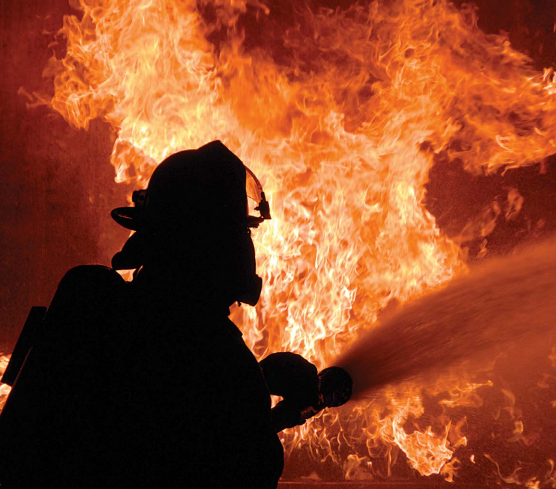
When a fire breaks out on board a vessel there is no fire service ready to assist in extinguishing it – it is up to the crew themselves. The consequences can be catastrophic, and all those who have worked on board a vessel are aware of the difficulties involved with managing a fire and the crucial importance of fire prevention.
The information in this handbook is designed to assist shipowners and crews in those fire prevention efforts. Fire! explores marine cargo fires and explosions, focusing particularly on self-heating: explaining the principles of self-heating, and investigating several types of cargo fires and explosions including those in bulk cargoes, containers and tankers.
This handbook is not designed as a substitute for the full International Maritime Solid Bulk Cargoes (IMSBC) and International Maritime Dangerous Goods (IMDG) Code entries, which should be understood and followed.
The complete guide can be downloaded at the bottom of this page
Quick reference guide
Coal
Coal starting temperature. It is important to check coal temperatures vs. the 55°C limit before and during loading. The International Maritime Solid Bulk Cargoes (IMSBC) Code also limits heating of fuel tanks adjacent to cargo holds.
Coal carbon monoxide production. When evaluating how to deal with high carbon monoxide concentrations in coal it is important to consider all of the relevant gas readings over the period since the coal was loaded.
Coal Lower Explosible Limit (LEL) readings. A high reading, above approx. 20% LEL, needs careful consideration because a risk of explosion may be developing.
Coal fires. If coal self-heating becomes a fire, then fire-fighting is usually carried out with water. The IMSBC Code states that water should not be used but there may be little alternative. Fresh water should be used if possible because seawater often causes problems with the end use of the coal.
Coal methane production. Some coal contains methane gas that is released once the coal is mined. Methane is flammable and so it can present an explosion risk in ships’ holds. Note: methane-emitting coal therefore needs ventilation, which is the opposite of self-heating coal.
Direct reduced iron. Direct reduced iron (DRI) is affected by water ingress, and so in heavy weather can start problematic self-heating. Seawater tends to be more reactive than fresh water. Direct reduced iron should be properly cooled and aged before loading in order to reduce its reactivity.
Charcoal
Charcoal is subject to the International Maritime Dangerous Goods (IMDG) Code. Depending on the particular material, there may be requirements such as adequate heat treatment and then cooling before packing. This is to reduce the reactivity of the charcoal by allowing it to oxidise under controlled conditions. Also, hermetically sealed packing may be required.
Reactive solids
Reactive solids include calcium hypochlorite and other oxidising solids. These materials do not react with air but they can be relatively unstable chemicals that decompose slowly over time, evolving oxygen. This self-decomposition can evolve heat which can lead to thermal runaway and an explosion. The IMDG Code, the International Group of P&I Clubs and some shipping lines give requirements for shipping some cargoes of this type, which are intended to reduce the risk of incidents.
B. Other causes of cargo fires and explotions
Cargo lights
Cargo lights in holds need to be properly isolated before cargo is loaded. This is best done by removing fuses or other physical links in the electrical circuits so that the lights cannot be switched on by mistake.
Smoking and hot work
Smoking and hot work need to be properly controlled. Control of smoking can be difficult where stevedores are working on board. Hot work permits
need to be properly considered, not just a ‘tick box’ exercise.
Cars and other vehicles
Cars and other vehicles carried on board ships present some risk of fire. Risks include cargo shifting in heavy weather and used vehicles in poor
condition giving rise to electrical faults.
Fumigants
Fumigants can cause fire or explosion, particularly if there is an excessive amount of fumigant in one place; or if the fumigant is in contact with liquid water e.g. from sweating or condensation. In these situations the fumigant can react too quickly, evolving excessive heat or explosive gas/vapour. Fumigants must be correctly applied by qualified personnel.
‘Fire!’ has been written in cooperation with Dr Neil Sanders, a partner with Burgoynes.
Downloads