Introduction
Monoethylene glycol (MEG) is a fine chemical product that is primarily used as a precursor in the manufacture of polyester and PET resins, with global production for 2025 expected to be in excess of 71m tonnes.
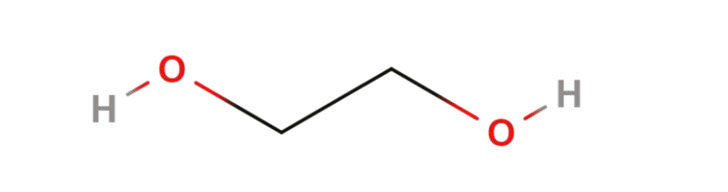
MEG is considered a sensitive cargo due to the way it is used in the production of polymers. The presence of trace impurities may interfere with catalysts and processes used to produce these polymers. As such care must be taken to ensure the cargo remains free of contaminants during transportation.
Pre-loading considerations
Quality parameters The typical quality specification parameters for MEG are:
- Appearance
- Colour (measured via the Pt-Co scale)
- Odour
- Distillation range
- Chloride content
- UV transmittance
- Acidity
- Aldehyde content
- Ash content
- Purity
- Specific gravity
- Iron content
The quality parameters which are most critical for the shipment of MEG and which are more commonly raised in quality disputes are the water, ultraviolet transmission (UVT) and chloride content parameters.
The water and chloride content of MEG can be adversely affected by tank cleaning residues present in the vessel’s containment system. In order to prevent seawater ingress, rigorous freshwater tank rinsing should be performed, followed by thorough draining of all lines and tanks nominated for loading.
We recommend consulting an appropriate grade change matrix in an industry-accepted tank cleaning guide such as Dr Verwey’s or Miracle, for tank cleaning guidance.
The UVT parameter is used to detect trace levels of aromatic hydrocarbons. These species are undesirable in MEG even at low levels because they are detrimental to the ability to process the MEG to form polyester polymers.
Cargo history
In order to prevent contamination with trace amounts of aromatics and a deterioration in the UVT parameter, careful consideration should be made with respect to the vessel’s cargo history. In general, it is not recommended that MEG is loaded into epoxy-coated cargo tanks if the last three cargoes contained aromatic hydrocarbon species such as benzene, xylene, toluene, styrene monomer and related species, or a product containing high levels of these species such as gasoline and pyrolysis gasoline. This is because aromatic hydrocarbons can become absorbed into epoxy-type coating systems and leach into subsequent cargoes. Only single figure ppm levels of aromatic hydrocarbons can bring MEG off-specification for UVT, which can be retained within the epoxy coating system for several voyages.
Stainless steel tanks
The absorption-desorption mechanism of contamination can be avoided when carrying MEG in stainless steel tanks. However due to the sensitivity of MEG to trace aromatics, care still needs to be taken to ensure tanks and lines are thoroughly cleaned.
Wall wash surveys
Tank cleanliness may be assessed prior to loading through the use of wall wash surveys, with a method for wall wash surveys outlined in ASTM E2664, ‘Standard Test Method for Methanol Wall Wash of Marine Vessels Handling Polyester Grade Monoethylene Glycol’.
This encompasses key parameters such as appearance, colour, hydrocarbons, and presence of chloride. The inclusion of UVT testing may be advisable as part of the wall wash survey especially if tanks had carried aromatic hydrocarbons in recent voyages. The crew should make sure that any areas on the bulkheads are dry prior to testing – tanks are not suitable for wall wash testing if they are not dry.
Loading & voyage considerations
Atmosphere MEG is susceptible to reacting with oxygen and can form undesirable species that increase the acidity and/ or aldehyde content to levels that would render the cargo off specification. Following satisfactory tank inspections, the tanks may be inerted in preparation for receipt of the MEG cargo. It is recommended that MEG is loaded into an atmosphere that has been purged with nitrogen to reduce oxygen exposure.
A hygroscopic cargo
Furthermore, MEG is hygroscopic, meaning that it will readily absorb moisture from the atmosphere. Carriage of the cargo under a nitrogen blanket can reduce the amount of moisture absorbed into the cargo during laden voyage. Because of the hygroscopic nature of MEG, an increase in moisture content in the first-foot sample during loading is expected and may be inevitable to some extent.
Sampling
During loading, as with all sensitive chemical cargoes it is recommend drawing manifold and first foot samples, with loading ideally suspended until the samples have been analysed and found acceptable. Even if the shippers’ surveyors do not draw such samples, it is prudent for the vessel’s crew to draw and retain a set of manifold and first foot samples in case an allegation of contamination arises.
Containers
Plastic bottles or metal cans with plastic linings are generally unsuitable for storing high purity chemicals as they contain plasticisers which could leech out into the product. Glass (preferably amber borosilicate) is the preferred sample container for these types of chemicals. Many chemical cargoes are sensitive to sunlight and therefore the use of amber glass is preferred. If the appearance parameter is alleged to be affected, then a set of samples can be drawn in clear glass bottles for immediate testing with the remainder drawn in amber glass bottles.
It is also recommended that, as a general precaution, a hermetic insert is fitted to the bottle neck in addition to the screw caps, with both securely fastened. The additional presence of such an insert will assist in preserving sample condition by limiting sample weathering/evaporation for samples which contain volatile components, and minimising potential moisture ingress for samples of hygroscopic cargoes such as MEG.
Temperature
MEG is liquid at ambient temperatures and exposure to heat should be reduced where possible and the cargo should not be stowed adjacent to cargoes heated above 40°C. It is therefore considered prudent to monitor oxygen content after loading and regularly throughout laden voyage.
Cleaning tanks
MEG has good solubility in water and so is considered a relatively easy product to clean from tanks following carriage, not generally require tank cleaning chemicals. After discharge, tank cleaning with ambient temperature seawater followed by rinsing with fresh water, draining, mopping and drying is generally sufficient to remove residues of the cargo. However specific guidance for cleaning with consideration to the next cargo should be sought from industry-standard tank cleaning matrices.
Loss Prevention Essentials
- Clean the tanks in accordance with industry recommendations.
- Assess tank cleanliness by way of wall wash survey as per ASTM E2664.
- Consideration may be given to testing the wall washings for UVT parameters.
- Purge tanks with nitrogen prior to loading if possible.
- Regularly monitor tank oxygen levels during carriage.
- Assess initial cargo quality through analysis of first foot samples from individual tanks and manifold samples during loading.
- Assess bulk cargo quality through analysis of an after loading parcel composite.
- Do not stow MEG adjacent to heated cargo tanks.
- Do not load MEG into epoxy coated tanks which carried cargoes containing aromatic hydrocarbons in at least the last three voyages.
Downloads