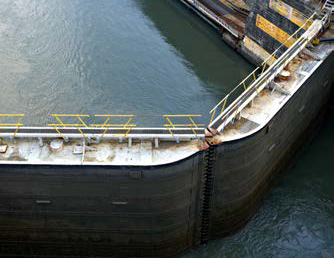
The vessel was alongside a quay awaiting clearance to proceed to a lock. Pilot arrangements had been confirmed, and departure was initially expected to follow the planned schedule. However, shortly before departure, the pilot contacted the vessel via VHF and requested an earlier departure than originally planned. The master agreed to advance the departure
by approximately 30 minutes.
This change introduced an element of urgency on board. The Officer of the Watch (OOW) initiated departure preparations, focusing on navigational readiness, including setting up the ECDIS passage plan, verifying bridge equipment status, and preparing communication channels.
While these tasks were completed, critical machinery checks were not conducted in full. In particular, the controllable pitch propeller (CPP) system was not tested prior to departure. The vessel had only been alongside for a limited period, and the OOW assumed that the propulsion system remained fully operational.
This assumption, combined with perceived time pressure, led to a deviation from the company’s Safety Management System (SMS), which required a functional test of the CPP before departure.
As the pilot boarded, the master returned to the bridge. A brief and informal handover was conducted, after which the OOW proceeded to the forward mooring station in accordance with onboard practice. A short master–pilot exchange followed; however, no structured Master–Pilot Exchange (MPX), addressing vessel manoeuvring characteristics or contingency measures, was carried out. The master then ordered all lines to be let go.
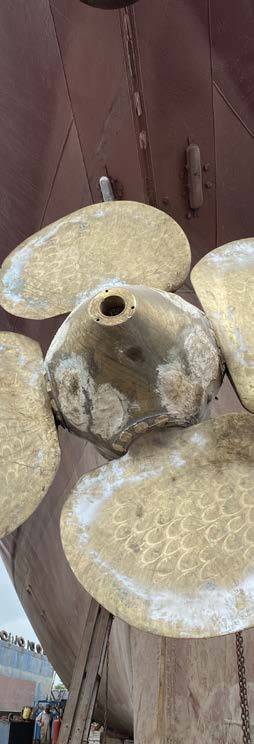
The vessel proceeded towards the lock under pilotage. During the final approach, at a relatively confined distance from the lock entrance, the master identified that the CPP was not responding as expected to control inputs. The pitch was effectively fixed at approximately 40% ahead, resulting in uncontrolled forward thrust and gradual acceleration.
The vessel continued to advance towards the lock gates at increasing speed. Attempts were made to regain control of the propulsion system from the bridge, but without success. Communication between the bridge and the engine control room was limited and unstructured at this stage. The master, under increasing stress, issued urgent and fragmented
instructions over the radio, requesting the mooring parties to secure lines ashore in an attempt to arrest the vessel’s movement.
The forward mooring team succeeded in placing a forward spring onto a bollard, but no additional lines could be secured in time. Simultaneously, the pilot instructed a standby tug, already positioned in close proximity to the vessel, to apply pushing force towards the quay in an effort to reduce forward momentum. While the tug’s intervention caused significant lateral contact between the vessel and the quay, it did not sufficiently reduce the vessel’s speed.
The vessel continued towards the lock entrance at an estimated speed of approximately three knots. Under increasing load, the forward spring line parted. The vessel subsequently made heavy with the outer lock gate.
Only after the impact—and approximately forty seconds
after the initial loss of effective propulsion control—did the master activate the emergency propulsion shutdown. Control was thereafter transferred to the engine control room.
Following the incident, port state control and classification society representatives attended the vessel. Damage was sustained to the vessel’s bow structure, the assisting tug incurred minor damage, and the lock gate suffered significant
structural damage, eventually leading to flooding and loss of function. There were no reported injuries or pollution.
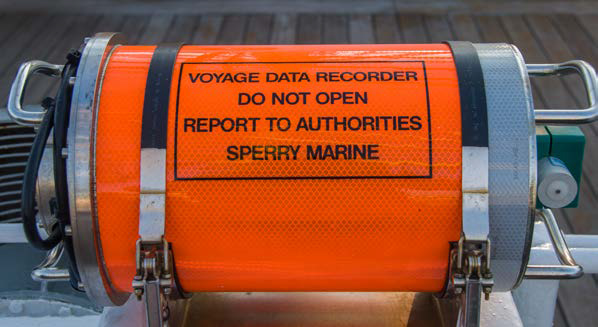
The vessel’s Voyage Data Recorder (VDR) was not secured by the ship’s staff in the immediate aftermath. Preservation of recorded data was instead carried out by port state authorities
approximately two hours after the occurrence, resulting in the potential loss of critical data. Concurrently, engineering staff initiated an internal investigation of the CPP system. Before external investigators were able to inspect the equipment, the system was reset and cleared by the chief engineer. This action
irreversibly removed potential evidence related to the cause of the malfunction.
Subsequent analysis of oil samples from the CPP system indicated degraded oil quality, despite records showing that the oil had been renewed approximately one year earlier. Further
review identified that several similar CPP-related near‑misses had previously been reported across the fleet. In at least one case, contact with another vessel had occurred. Despite these reports, no amendments had been made to maintenance
routines, condition monitoring, or operational procedures within the Planned Maintenance System (PMS), nor had fleet-wide safety alerts or guidance been issued.
Questions
When discussing this case please consider that the actions taken at the time made sense for all involved. Do not only judge but also ask why you think these
actions were taken and could this happen on your vessel?
- Does our SMS address these risks?
- What sections of our SMS would have been breached, if any?
- How do we handle pilot or external pressure when it conflicts with safe departure procedures?
- How do we ensure that all critical equipment is tested before every departure?
- When should the engine control room have been involved, and how should communication have been structured?
- How do we ensure proper preservation of evidence, including VDR data, after an incident?
- What would be the actions on the bridge at the first sign of abnormal CPP response?
- How can we ensure all near-misses are acted upon, and how do we ensure follow-up across the fleet?
- What controls do we have in place to monitor CPP oil condition, and are they sufficient to detect degradation early?
- What additional training could help the crew be better prepared for a situation like this?
- What support do we need from management (additional training, updated procedures, more resources) to strengthen our procedures?
- What immediate, actionable steps can we take from today’s discussion?
Downloads