Introduction
A variety of refined petroleum cargoes are transported via the shipping industry. These cargoes are classified by the hydrocarbon range of the products.
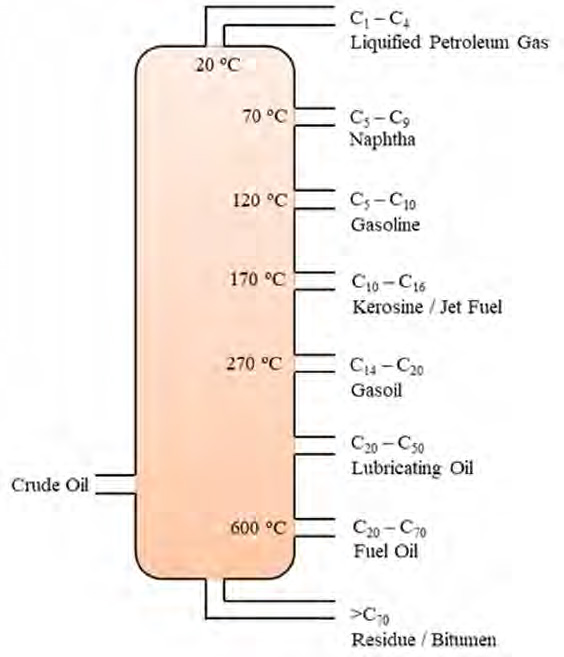
Figure 1 Distillation Column of Crude Oil
Examples include:
- Gasoline – classified by the hydrocarbon range C5 – C10
- Jet kerosene – classified by the hydrocarbon range C10 – C16
- Gasoil – classified by the hydrocarbon range C14 – C20
These products are isolated from crude oil, mainly through distillation where fractions are isolated based on a specific boiling point range. The boiling point of each fraction corresponds to its specific hydrocarbon range, with the higher hydrocarbon ranges correlating to higher boiling point ranges.
Within the classification of each category, there are several quality parameters that can be used to define grades within the categories. Parameters such as sulphur content, flash point and oxygenate content are used to identify specific grades.
Guidelines for the shipment of petroleum cargoes
1. Pre-loading
The ‘HM 50 Guidelines for the cleaning of tanks and lines for marine tank vessels carrying petroleum and refined products’, published by the Energy Institute provides tank cleaning guidelines for switching between various dirty and clean/refined petroleum product grades.
- Particulates: A common contamination found in refined petroleum products is the presence of particulates. This often leads to a failure in the appearance parameter which states that the cargo should be ‘clear and bright’ and typically leads to further cargo processing operations. Pre-loading considerations should therefore include the state of the tank coatings, with scale being regularly lifted and tank coatings repaired. Attention to the state of the previous cargo should be paid, as indications of sediment or dark colouring in previous cargoes may indicate a breakdown in the tank coating and could affect the subsequent cargo to be loaded. Maintaining the coatings of the cargo tanks can go towards eliminating the vessel as a potential source of particulate contamination.
- Tank atmosphere: Attention should also be paid to the tank atmosphere prior to loading. When loading certain grades of petroleum products, such as gasoil which is sensitive to flash point contamination, it should be ensured that the tank atmosphere is purged to below 2% hydrocarbons by volume to prevent contamination of the next cargo.
- Segregation: If the vessel is to carry multiple grades of petroleum cargoes, then the vessel should have fully segregated lines with all valves and blind spades in the correct positions. Inert gas (IG) lines should also be segregated. This is to prevent liquid contamination during loading and discharge operations, as well as vapour contamination during laden voyage.
Are the vessel’s tanks suitable to carry the nominated cargo?
- What was the previous cargo carried by the vessel?
- Is the cleaning from the previous cargo in line with industrial guidelines, such as Energy Institute HM 50 guidelines for a change
- between petroleum products or Dr Verwey’s or Miracle when changing grades from a chemical to a petroleum product?
- Are cargo tanks and cargo lines dry?
- Do the cargo tanks require purging to below 2% hydrocarbons by volume?
- Are the tank coatings in a suitable condition to prevent particulate contamination?
- Are the cargo lines and IG lines properly segregated to load the nominated grade?
2. During loading
Manifold, first foot and after-loading samples should be drawn during the loading of the cargo. Some terminals do not allow manifold samples to be drawn therefore the rules and regulations of each terminal should be followed. Samples during the stages of loading allow for potential contamination issues to be caught early on and thoroughly investigated, possibly preventing or reducing contamination of the bulk cargo.
3. During voyage
With petroleum cargoes there are no specific carriage instructions as the products are fairly stable. Low flash point products are to be carried under IG as per SOLAS requirements.
The refined petroleum product grades do not usually require heating during voyage. Heavier grades such as fuel oil, bitumen and some base oil cargoes often require special voyage instructions, such as heating and recirculation.
4. During discharge
At the discharge port, before-discharge samples should be drawn as individual tank samples, either as running or upper, middle and lower level samples.
5. Risks associated with carriage
Previous cargo contamination Depending on the previous cargoes and the subject grade to be loaded, specific tank cleaning instructions may be required to prevent contamination of key sensitive quality parameters.
- Sulphur contamination: Gasoline and gasoil cargoes have several different grades requiring different sulphur contents. The level of sulphur allowed in the gasoline and gasoil cargoes is often determined by the environmental regulations of the importing country. Therefore, it is important to ensure that previous high sulphur cargoes do not contaminate an ultra-low sulphur cargo subsequently loaded. The vessel should ensure that the tanks are washed with water and well drained before additional tank cleaning such as purging and lifting scale is conducted as needed.
- Oxygenate contamination: Some petroleum cargoes such as gasoline contain oxygenate additives. This parameter typically has strict limits and therefore if cargo tanks are not properly cleaned these additives can contaminate the next cargo, causing the cargo to be found off specification
Particulate contamination
Particulate contamination such as rust, damaged tank coating and dirt or salts may be identified in petroleum cargoes which could result in the cargo being identified as off specification with respect to the appearance parameter if present at significant levels. Particulates can originate from the shore side, including shore tanks and lines as well as from the vessel, depending on their composition.
Rust, dirt and salt are ubiquitous in the marine environment and are sometimes difficult to eliminate from cargoes.
Another source of particulate contamination is from the inert gas system on board a vessel, which can cause inert gas soot to be deposited within the cargo tanks. Due to some petroleum product cargoes having very low flash points, the cargoes can cause highly flammable vapours to be produced during the laden voyage, and in combination with oxygen and a heat source, this can easily result in an explosion. As such, tanks carrying low flashpoint cargoes are typically blanketed with inert gas in order to reduce oxygen levels to below the lower explosion limit (LEL) of the cargo.
Vessels typically process exhaust gases (flue gas) from the boilers or main engine for use as an inert gas. The flue gas passes through a scrubbing tower, which serves to clean the gases and reduce levels of sulphur dioxide and soot to a minimum, however it is still possible for some soot to remain in the gas, which can then settle on top of the cargo during the tank inerting process.
IG soot is typically very light in weight compared to other types of particulate contamination; hence IG soot contamination can typically be identified by the presence of particles floating on top of the cargo rather than settling out to the bottom.
Owners can ensure that the vessel has minimal contribution to the presence of particulates by ensuring that freshwater rinses are conducted, where required, to remove salt residues from seawater and that tank coatings are maintained to a good standard. Any broken-down coating and flaking rust can be removed to minimise risk of particulate contamination, and coating retouched regularly where required.
Liquid contamination
If a vessel is set to load multiple grades of petroleum products and full segregation of the cargo lines is not achieved, either by human error or by leaking valves due to wearing of seals, then admixture of the two or more grades can occur. This can result in contamination of the cargo for multiple quality parameters.
Vapour contamination
- During loading: Due to the sensitivity of the flash point parameter of certain cargoes such as gasoil, exposure of these cargoes to vapours from more volatile products such as gasoline can result in the gasoil cargo exhibiting a depressed flash point and subsequently being found off specification. Therefore, during tank cleaning operations the cargo tanks should be purged to below 2% hydrocarbon by volume to prevent vapour contamination with low boiling point volatile hydrocarbons.
- During laden voyage: If high flash point cargo such as Jet A1 and gasoil is improperly segregated from co-loaded low flash point cargoes such as gasoline, then gradual migration of low boiling point, volatile hydrocarbons can occur. This migration of volatile vapours can result in a depression of flash points when the samples are analysed before discharge, despite not necessarily showing up in the after-loading samples.
Blending
Occasionally, petroleum products can be blended on board a vessel from several sources, resulting in a parcel of one overall quality. This often occurs with gasoline products, where the final gasoline is produced from different blend components of different quality.
Blending on board is not recommended as the product may not be homogenous across the vessel’s cargo tanks and thus precise sampling and preparation of volumetric composites is required to determine accurate quality of the overall parcel.
It is recommended that manifold samples are drawn each time cargo is loaded on board the vessel from a new shore tank/source. This will allow for investigation into the quality of each parcel loaded if a dispute arises. Water contamination If tank cleaning is conducted during a grade change and cargo tanks and lines are insufficiently stripped, this may lead to the cargo being contaminated with water.
Water will typically be present in petroleum products as a separate phase. The non-miscibility of the two phases (water and oil) can limit the extent of contamination and usually allows for easy separation. Small amounts of water can remain suspended in the cargo and result in a hazy appearance, whereas if sufficient quantities of free water are present then a free water layer at the bottom of the cargo may be noted.
Some petroleum products have a water content specification limit, but the presence of haziness or a free water phase can also render the product off-specification for the appearance parameter.
If a water layer is noted by ullage temperature interface (UTI) gauging on board the vessel, then de-bottoming exercises can be undertaken to remove the water from the cargo tank. However, this will result in a small quantitative loss as some cargo would also have be removed to ensure the removal of all water.
Salt contamination
Following the tank cleaning prior to the loading of jet fuel, the vessel’s cargo tanks should undergo a rinse with fresh water to remove any salt residues that may be present from tank cleaning.
If this is not conducted the presence of salts can be observed as white particulates in the cargo and thus can cause the sample to fail the appearance parameter.
6. Examples of petroleum cargoes and common contamination claims
Gasoline
Gasoline is typically composed of several blend components. As such gasoline cargoes are sometimes blended on board a vessel from several different sources to give the final gasoline blend. If the components are not blended in the correct proportions this can lead to alterations in parameters such as the research octane number (RON) and oxygenate content, possibly resulting in the cargo in some tanks being found off specification.
Jet A1
A common contamination observed in Jet A1 is particulate contamination. This is due to Jet A1 having strict particulate specification limits at the point of usage, i.e. when fuelling aircraft to prevent blocking of fuel injectors. During bulk transportation of Jet A1 cargo, the specification limit for particulate content as tested by IP 423/ASTM D5452, only applies at the point of manufacturing. However, this does not preclude the appearance parameter which states that the cargo should be free of solid matter.
Gasoil
Depressed flash points can be observed in gasoil cargoes when co-loaded with a volatile cargo such as gasoline. Furthermore, sulphur contamination of ultra-low sulphur diesel (ULSD) can occur when loaded after a carriage of high sulphur cargoes.
Conclusion
Most voyages with petroleum cargoes will be uneventful, but sometimes things go wrong. To minimise the risk of a claim of contamination resulting from the mishandling of the cargo, it is important that correct measures as described above are taken during loading, voyage and discharge.
Loss Prevention Essentials
- Prepare the tanks for the next cargo by proper tank cleaning as per industrial guidelines.
- If carrying more than one grade, ensure that the lines are fully segregated with blind spades in correct positions.
- Proper samples taken at loading and discharge will protect a vessel’s interests in case of a dispute.
- Comply with the charterers’ voyage instructions, e.g. on heating. If these are unclear, seek clarification.
Prepared in collaboration with CWA International
Downloads